This is a collaborative post
It’s a question many parents ask themselves: how do we balance the digital world our children live in with the physical world they need to explore? In an age of tablets and on-demand entertainment, getting kids to move can feel like a real challenge.
But active play is more important than ever. It’s not just about burning off energy; it’s a fundamental building block for a healthy, happy, and well-rounded childhood. From strengthening their bodies to shaping their social skills, regular physical activity offers benefits that last a lifetime.
Table of Contents
ToggleBeyond the Screen: The Need for Movement
The magnetic pull of screens is a real challenge for modern families. While technology offers wonderful ways to learn and connect, it can easily lead to a more sedentary lifestyle. The NHS suggests that school-aged children get at least 60 minutes of moderate to vigorous physical activity every day. This might sound like a lot, but it doesn’t have to be a chore or a highly structured session.
Movement is how children naturally learn about their bodies and the world around them. Simple activities like chasing bubbles in the garden, racing to a lamppost on the way home from school, or having a dance party in the living room all count towards this daily goal.
The main idea is to break up long periods of sitting with bursts of activity. When children are physically active, they’re not only improving their physical health but also their mental well-being. A good run-around can boost mood, reduce stress, and even lead to a better night’s sleep for everyone.
The trick is to think of activity not as exercise, but as play. When movement is fun, children are naturally drawn to it. The evidence is clear that active kids are healthy kids, and fostering this love for movement early on sets a positive pattern for their future. It’s about creating an environment where choosing to run, jump, and climb is just as easy and appealing as reaching for a remote control.
Building Strong Bodies and Minds
Active play is the work of childhood, and it builds much more than just memories. Every time a child runs, jumps, throws, or kicks a ball, they’re building a stronger, healthier body.
Regular physical activity is essential for developing strong muscles, robust bones, and a healthy cardiovascular system. This foundation of physical activity and growth helps children maintain a healthy weight and reduces the risk of health problems later in life. It also refines crucial motor skills, improving their coordination, balance, and spatial awareness.
The benefits aren’t just physical. Movement has a deep impact on a child’s mental and emotional state. Physical exertion releases endorphins, which are natural mood boosters that can help ease anxiety and stress. This connection is vital, as an active body can help create a calmer, more focused mind. Research shows that regular exercise can significantly support kids’ mental health and improve their ability to concentrate in the classroom.
For parents looking to channel this energy into a constructive and enjoyable pastime, organised sports can be a fantastic option. Finding the right environment, such as the best kids football academy, provides a structured way for children to develop these physical and mental skills while having a brilliant time with their peers. It offers a positive outlet where they can build confidence and learn what their bodies are capable of in a supportive setting.
Developing Essential Life Skills Through Sport
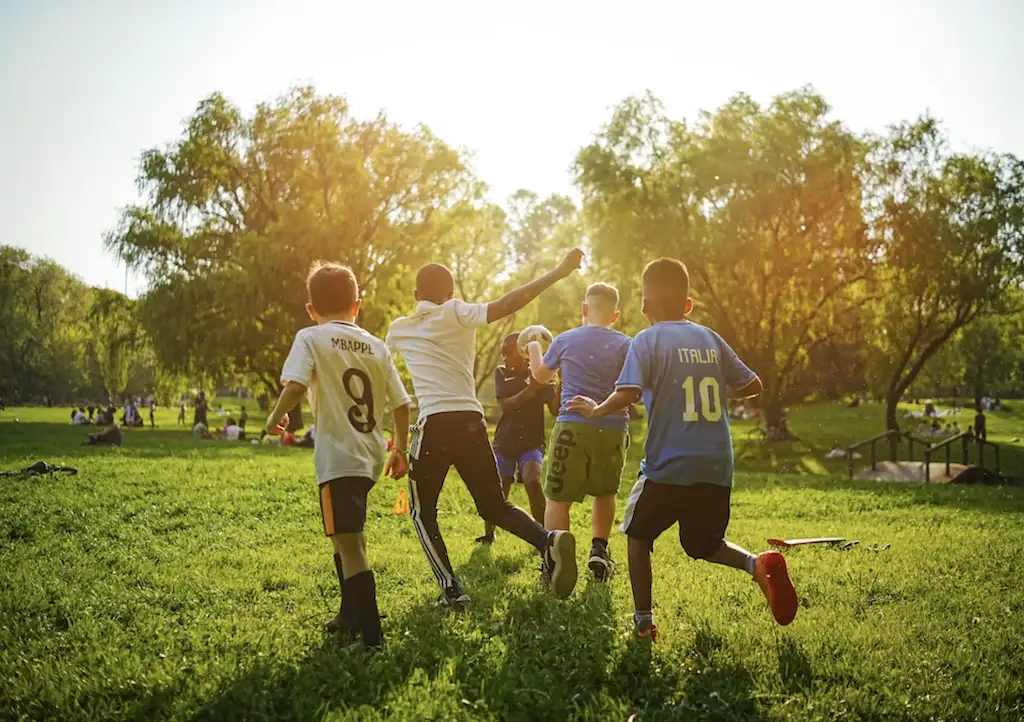
Beyond the obvious health advantages, active play and organised sports are powerful tools for teaching children essential life skills that will serve them well into adulthood. When children play together, whether in a formal team or an informal game at the park, they are learning how to interact socially in a dynamic, real-world setting.
Here are some key skills developed through active group play:
- Teamwork: Sport teaches children how to work with others towards a shared goal. They learn to communicate, share responsibility, and understand that the group’s success depends on everyone playing their part.
- Resilience: Not every game can be won. Experiencing both victory and defeat in a supportive environment teaches children how to cope with disappointment, learn from their mistakes, and bounce back with a positive attitude. This is resilience in its purest form.
- Communication: Children learn to listen to coaches and teammates, express their own ideas, and resolve minor conflicts on the field or court.
- Respect and Discipline: Following the rules of a game, respecting the referee’s decisions, and showing good sportsmanship towards opponents are invaluable lessons in respect and self-control.
These experiences show children how fun helps them thrive by providing a safe space to navigate complex social dynamics. The skills learned while chasing a ball or running a race are directly transferable to the classroom, friendships, and their future careers.
Making Activity a Family Priority
Incorporating more physical activity into your family’s routine doesn’t require a complete lifestyle overhaul. Often, the most effective approach is to make small, consistent changes and, most importantly, to lead by example. When children see their parents enjoying an active lifestyle, they are far more likely to view movement as a normal and enjoyable part of life.
Making activity a family affair can transform it from a to-do list item into quality time spent together. Plan a weekend walk in the woods, go for a family bike ride along a local trail, or simply head to the park with a ball. These shared experiences create lasting memories while getting everyone’s heart rate up.
Look for opportunities in your daily routine. Could you walk or cycle on the school run a couple of times a week? Can you turn household chores into a game? Putting on music and having a 15-minute ‘tidying up dance’ can make cleaning feel less like work and more like play. It’s about shifting the mindset and seizing small moments.
Explore what’s available in your local area, from parks and playgrounds to leisure centres and community clubs. Scheduling active time, just as you would schedule homework or a playdate, signals that it is a valued part of your family’s life, offering a chance for screen-free activities.
The goal is to foster a lifelong love of movement. By making it a fun, social, and regular part of your family’s culture, you give your children a gift that will contribute to their health and happiness for years to come.
Active play is a powerful investment in your child’s physical, mental, and social development. It’s not about training the next Olympic athlete but about building a joyful and healthy foundation for life. The simplest game in the garden or kickabout in the park might just be the most important part of their day.