

The boys have long had a fascination with sea glass. We have even tried to make our sea glass own during lockdown when we could not get to a beach. So whenever we go away they are always on the hunt for sea glass. We have made some great finds on the Isle of Wight and Cornwall. Both of which are known as some of the best places to find sea glass in the UK. We love hunting for the blue pieces in particular. There are several sea glass beaches in Cornwall, where we have successfully found sea glass while beach combing. Please do let me know if you think there are any other Cornwall’s beaches that we should add to our list.
What Is Sea Glass?
Sea glass is basically old of pieces of glass that have been weathered and eroded by the sea. The years in the sea have given the beach glass a smooth and frosty appearance. Typically, the longer a piece of glass has spent in the sea, the more frosted and smoothed it appears. Normally you can find it along the shoreline. Ideally on a shingle, sandy beach where the tide creates pockets of small stones. This is where we have found it to be the most successful. Although Harry still needs a bit of reminding that sharp edges do not mean sea glass. Plus we have had many other finds such as hermit crabs and mermaid’s purses.
We love to hunt the blue pieces in particular. The different colours you find can indicate what it originally was. The more common colours are green and brown, which are often from an old beer bottle or soft drink bottles. The white pieces originated as clear glass normally from tableware. The rarer blue-coloured pieces can originate from medicine bottles or older spirits containers. When we visited Barcelona we even found red glass which I think is one of the rare colours, having not found any since.
Many pieces of sea glass that are found on Cornwall beaches are used to make glass art and jewellery. You can even take place in your own jewellery-making course while visiting.

Why The Cornish Coast For Sea Glass?
The reason Cornwall is so good for finding a sea glass beach is that it has long had a rich history connected to the sea. Right from the age of sailboats all the way through to the industrial era. With its historical connetations searching for sea glass in Cornwall means that you are essentially looking through maritime history. Although the boys and I just like the fact that it is pretty!
Because of its history, there are many historical trade routes and shipwrecks around this particular part of the UK. All from the days when glass bottles were a primary packaging material. For reference, if you do find a blue piece of sea glass it is likely to be from a medicine bottle from the Victorian period making it over 100 years old.
Sea Glass Hunting Tips
- Timing: We find the best times for collecting our sea glass treasures to be during low tide and after storms. When the sea has churned up the shore, revealing more treasures. The earlier in the morning the better as well as it is less likely anyone else has been out doing the same.
- Tumbled Glass: Look for pieces of glass that are well-tumbled, with frosted surfaces and smooth edges. Avoid sharp edges as you want pieces that have spent many years in the sea.
- Tools: Carrying a small mesh bag or a container can be helpful for collecting. A mesh bag allows sand and water to drain away from our finds. You also are more likely to find sea glass if you get down low and poke around the little mounds of pebbles and shingle left by the sea. Be prepared to dig.
- Visibility: Normally you visit the beach in the sun. But cloudy days can enhance the visibility of sea glass on the wet sand by reducing the glare. The dull days mean that the coloured glass also looks brighter in the natural light and easier to spot. You may want to think about how you store your sea glass finds. Glass jars can be a great idea if you want to use them as decorations for a living area.
- Location: We pay attention to areas where the tide brings in more debris. Such as below cliffs or near the strandline, as these spots can often yield a higher concentration of sea glass.

Top Sea Glass Beaches Cornwall
Thanks to Cornwall’s rugged coastline, the beaches are not only scenic but also serve as treasure troves. Here are some of the best beaches to find sea glass in Cornwall
Marazion Beach
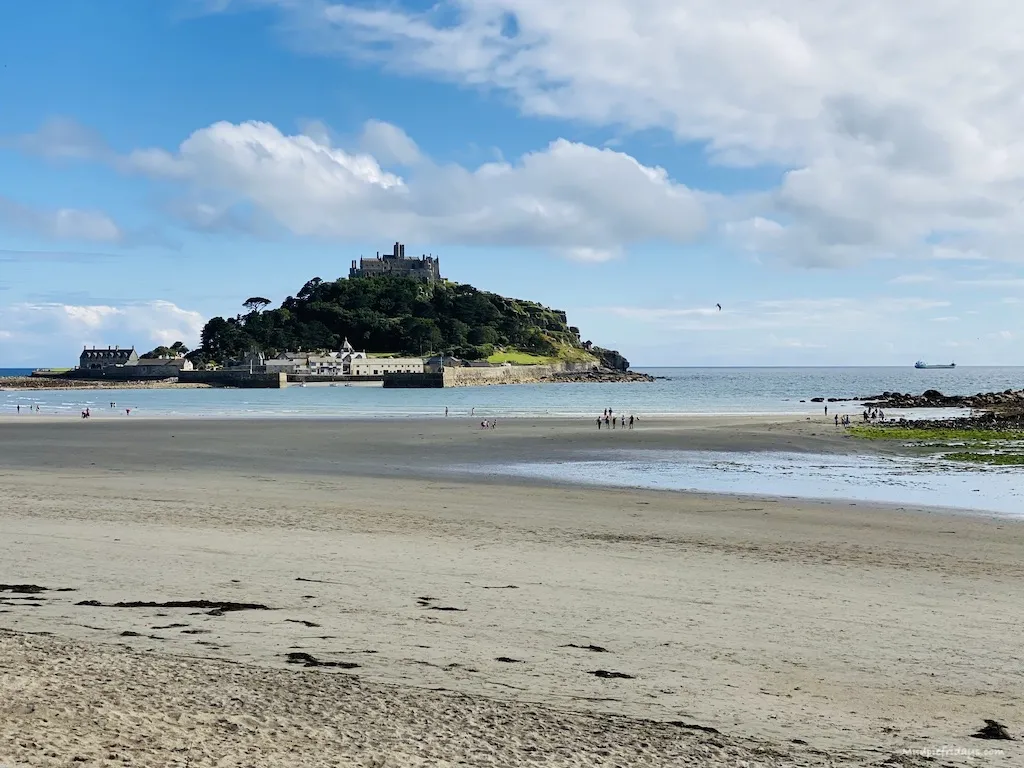
Situated near Penzance, Marazion Beach is known for its stunning views of St Michael’s Mount. An iconic rocky island crowned with a medieval church and castle that is accessible by foot via a causeway at low tide or by boat at high tide. Which is worth a visit although you need to check the tide times if you intend on walking. We got a little wet on our visit. The beach itself is a long expanse of golden sand that stretches along Mount’s Bay.
During low tide, the water recedes to reveal a vast area of the beach. This means it can get busy with keen surfers and those enjoying water sports so an early morning visit is best if you are looking for Cornish sea glass. If you are hunting with children like we are then you will be pleased to know that the sea is ideal for paddling. There are also plenty of facilities, car parks, cafes, shops and public toilets.
St Ives Harbour Beach
St Ives is a well-known holiday destination. Although many will head to the stunning Carabis Bay with its long stretches of sand which I must admit is one of our favourite spots when it comes to Cornish beaches. If you are looking for sea glass in Cornwall then St Ives Harbour Beach is a great place. Located as one end of the large sandy bay, normally you can come across sea glass at low tide. Known for its vibrant art scene, if you are lucky then this is reflected in the pieces you find. The town of St Ives is also worth exploring with its whitewash cottages and little alleyways. Be aware that it is extremely popular in the Summer months so arrive early to secure a parking space if you are not staying locally.
Perranporth Beach
Perranporth Beach is located on the north coast of Cornwall. It is a favourite of both locals and tourists. The three-mile-long golden sands provide ample opportunity for a fruitful search, especially after a storm when real treasures are unveiled. The beach is also popular with keen surfers. Well known for its natural beauty, dunes, and the Watering Hole. Which is a bar and restaurant situated directly on the sand, a great spot to relax after a day of beachcombing.
Pentewan Beach
Pentewan Beach is situated on the south coast of Cornwall. The beach is approximately half a mile long and is situated at the eastern end of St Austell Bay. It is nestled between two headlands which provide a certain degree of shelter, making the waters here relatively calm and suitable for swimming and water sports. With a sandy shore line it is a privately owned beach so worth checking that access is not restricted when you visit. Historically, Pentewan was a busy port, exporting china clay and other local minerals which makes it a good place to hunt for sea glass in Cornwall. Remnants of the old harbour and railway can still be seen near the beach. There are facilities nearby including a shop, café, and public toilets.
Porth Beach
Porth Beach is a popular sandy beach located on the outskirts of Newquay. At high tide, the beach can disappear entirely, so it’s important to check tide times before visiting. Making the best time to visit low tide for sea glass hunting. The beach is backed by cliffs on one side and Porth Island to the East. Which can be accessed by a footbridge from here you can see Watergate Bay a thirty minute walk. If you are looking for a pit stop then the Mermaid Inn is right on the beach.
Porthcurno Beach
Located in the far west of Cornwall, England, near Land’s End. Porthcurno Beach is encased by dramatic cliffs and clear turquoise waters. Which can make it seem more akin to a Mediterranean destination than a British one. Visible from the Minack Theatre which looks down on the beautiful bay. Its proximity to the theatre can mean that you have a higher chance of uncovering some great sea glass finds. As well as it having historical importance as the location of the Porthcurno Telegraph Museum. The beach is accessible via a small road leading down from the village of Porthcurno. There is a car park, public toilets, and a café nearby
Sennen Cove
Sennen Cove is also near Land’s End, renowned for its beautiful sandy beach and picturesque harbour home to a small fleet of fishing boats. It has a wide expanse of golden sand that stretches for nearly a mile and is backed by sand dunes and dramatic cliffs. The beach is popular for both swimming and surfing due to the consistent swell and clear waters. There are surf schools and shops where you can take lessons or hire equipment.
Portreath Beach
Portreath Beach is a sandy beach located on the north coast of Cornwall. At high tide, the beach can become quite narrow, while at low tide, it reveals a wider expanse of sand. So it is worth checking tide times before visiting. Portreath was once a busy port, importing coal and exporting copper from the local mines. Some remnants of this industrial heritage can still be seen around the village. Which makes it ideal for beach combing.

Maenporth Beach
Maenporth Beach is a picturesque sandy cove located on the south coast of Cornwall, England, near the town of Falmouth. The beaches around Falmouth, can be good places to look for sea glass, given the town’s maritime history and the presence of old shipwrecks offshore. Falmouth is also known for beaches with rock pools such as Gyllyngvase Beach. Although Maenporth Beach is known for its fine golden sand and clear, calm waters, making it ideal for swimming, paddling, and beach activities.
Have you been to any sea glass beaches Cornwall? I would love to hear about your experiences and the glass pieces you have found in the comments below.

If you’ve liked this post please follow me on my social media channels:
Mudpie Fridays: Twitter | Instagram | Facebook | Pinterest |LinkedIn
PIN for later – The Best Sea Glass Beaches in Cornwall