
Croatia Travel Tips. We spent two weeks of the Summer visiting Croatia. Staying on the Dalmatian coast moving around Sibenik, Split and the city of Dubrovnik during the high season. It was the first time we had visited Croatia and really fell in love with the country. I am sure we will return to explore other areas in the future. However, as with anywhere, you visit for the first time we learnt a few things which made our trip smoother. Some of these things it, would have been helpful to know before we arrived. So I am sharing tips for Croatia here to help you plan your trip to Croatia. If you have visited and feel that I have missed some Croatia travel tips please let me know in the comments below and I will get them added.
Tips for visiting Croatia
Here are some practical tips for visiting Croatia which is now on the list of many popular destinations. Find out more about what we got up to during our holiday at the bottom of this post.
Wi-Fi & Phones
As Croatia is a European country so you should be able to use your mobile phone without incurring additional charges although it is always worth checking with your provider. We did use our phones a fair bit, especially google maps. We did find that Wi-Fi is a little hit-and-miss. In the larger cities such as Split and Dubrovnik, we did not have any problems. Although outside of this we found it patchy at best. Plus the phones would often go from nothing to 5G and everything in between while you were looking at them. So if you are doing a lot of exploring ensure you download your maps before setting off.
Currency & Cash
This is probably the biggest tip for Croatia which I wish we had known before we went. When we visited the local currency was Croatian Kuna. Although in September (2022) they are due to join the Euro. In preparation for this, we have noticed that pricing in some places uses both currencies. Especially those things that are more expensive. Such as boat trips. I would anticipate that prices will increase as they make the changeover.
Cash is most definitely king in Croatia when we visited. Now whether this has something to do with the change over to the Euro I have no idea. Many places especially during our stay in Sibenik only took cash. While others would charge a markup for credit cards and debit card transactions expect around 5%. The good news is that there ATMs on most street corners. I do not think I have ever seen so many. Although be careful when using them as they quote their own exchange rate there and then. Which we found to be substantially lower than the going rate. We also found they took up to 12% transaction fees. So it is worth shopping around especially if you are in a city.
When we needed to withdraw money we opted to use the rate determined by our banks at home and pay on average around 36kn (approx £4.20) as a transaction fee. This way we tended to draw larger sums out to avoid paying lots of charges. However, my bank limited significantly the amount of money I was able to draw out on a daily basis which was annoying as it meant that I would incur higher transaction fees. So I would advise checking the daily limit on your debit card before leaving the U.K. This is not just Croatia travel tip and should be done regardless of where you are travelling. Whether this would be the case for a currency card I am not sure.
Bottled water
I did a little research and a lot of places state that tap water is okay to drink. The tourist board website, states that it is perfectly okay to drink. We found many people drank bottled water, including most of the tourists. If you are visiting an attraction such as the Dubrovnik Walls or the Krka National Park then expect to pay around 20kn for a small bottle. Although we found in the out of town supermarkets such a Lidl sold 1.5lt bottles for much the same price. More convenience store-type supermarkets also put a markup on water.
Restaurants & eating out
During our travels, we found that outside of the larger towns we saw local restaurants on side of the roads. This seems commonplace and similar to Italy. It would also prove a good option if you did not want to drive into the centre of a town.
Many of the restaurants selling Croatian cuisine served a mix of Italian and Turkish-style food. You can really see the influences in the more traditional style restaurants. I think that there is probably a pizzeria on every corner. They also seem to have a lot of snacky type food.
Another big Croatia travel tip is that generally, Croatians seem to eat later 9pm+ we found this in Sibenik. Which worked well for us as it meant although a table is reserved at 9 pm we could eat at the same table at 6.30 pm. However, we found eating in Split to be problematic. With many of the restaurants are booked in advance and the waiters are not willing to slot you in beforehand. Plus as there are a lot more tourists in the city many tables are booked earlier in general. Although there are so many restaurants it can be disheartening for the kids to keep walking from one to another when they are hungry.
We had hoped just to try and find a place to eat but it rarely worked like that. Those that do not take reservations have long queues. In hindsight booking in advance is probably a good idea if visiting during peak times. Of course, you need to know where you want to eat to be able to do that.
Interestingly we did not have the same problem in Dubrovnik. Where there were lots more restaurants that did not reserve tables so we could often walk straight in.
Supermarkets
If you are self-catering and have access to a car then think about where you pick up supplies. This tip for Croatia will make a difference to how much you spend on holiday. We found a big difference in pricing between the supermarkets. With the out-of-town supermarkets being significantly cheaper than the small convenience store versions. Although this is commonplace across Europe and the UK I was quite surprised by just how different they were. We also found a Lidl which was cheaper again compared to the local brands. This in fact ended up being our supermarket of choice for the first part of our holiday before we moved onto a new location.
Swimming in the sea
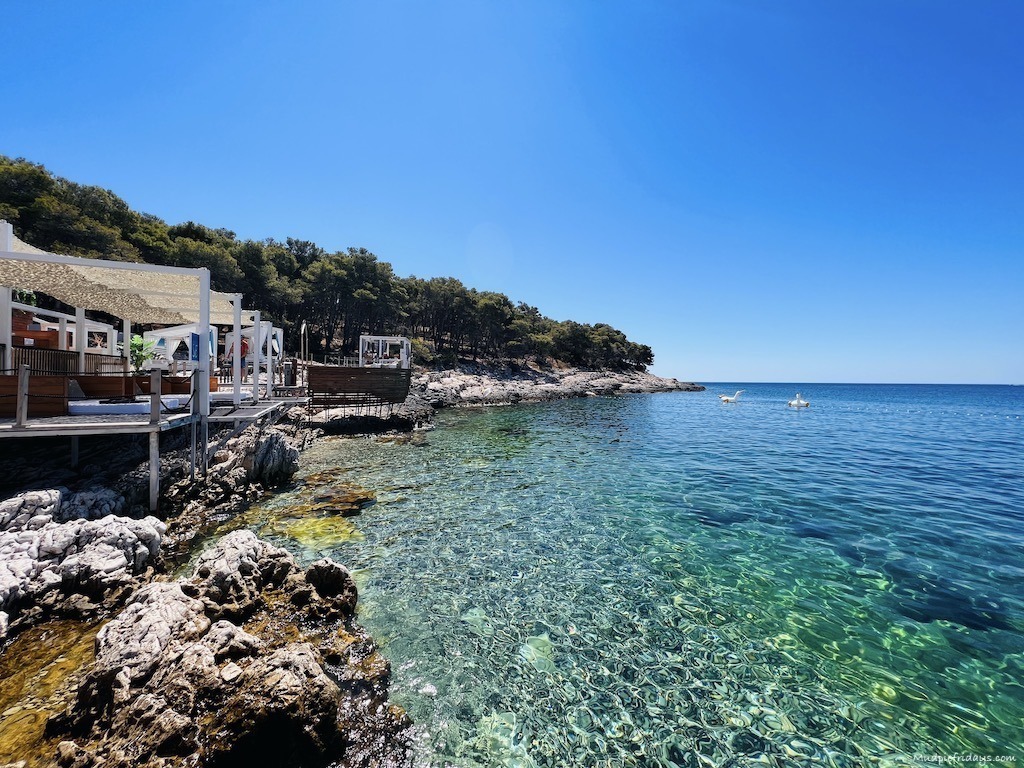
I am a bit of a chicken when it comes to swimming in the sea. However, I really enjoyed the Adriatic sea as the water is warm. It was also very hot when we visited so cooling off in the sea was much needed. The waters of the Adriatic coast are extremely clear. And although all the photos you see of the beautiful beaches before arriving give this impression. It is not until you are there and can see Croatia’s beaches for yourself that you really believe it.
There are two things that need to be on your shopping list if you intend on visiting Croatian beaches. These are water shoes, as many of the beaches are made up of small pebbles. And even if they are not (we found one sandy beach during our stay) there is likely to be in the water and further out. Secondly do not forget to bring your snorkel if you have one. They are readily available to purchase although expect to pay 150kn (£18) upwards for a kids one. The boys enjoyed spotting th fish and sea urchins on our visit.
Due to the water being so clear you can see all sorts of sea life even just off a beach. Plus a number of the boat trips will take you to popular islands which were well known for snorkelling. Read all about our first experience of snorkelling in Croatia.
Souvenir shops
Many of the shops in the towns and particularly in th cities sell the same things. When we were looking for snorkels we haggled and got the price down. So even though it is not in the market many of the tourist shops will haggle a little. Plus many of them will want cash with some only accepting cash and turning down a transaction if you want to pay by card. You are much more likely to agree to a lower price if you can pay in cash.
The heat
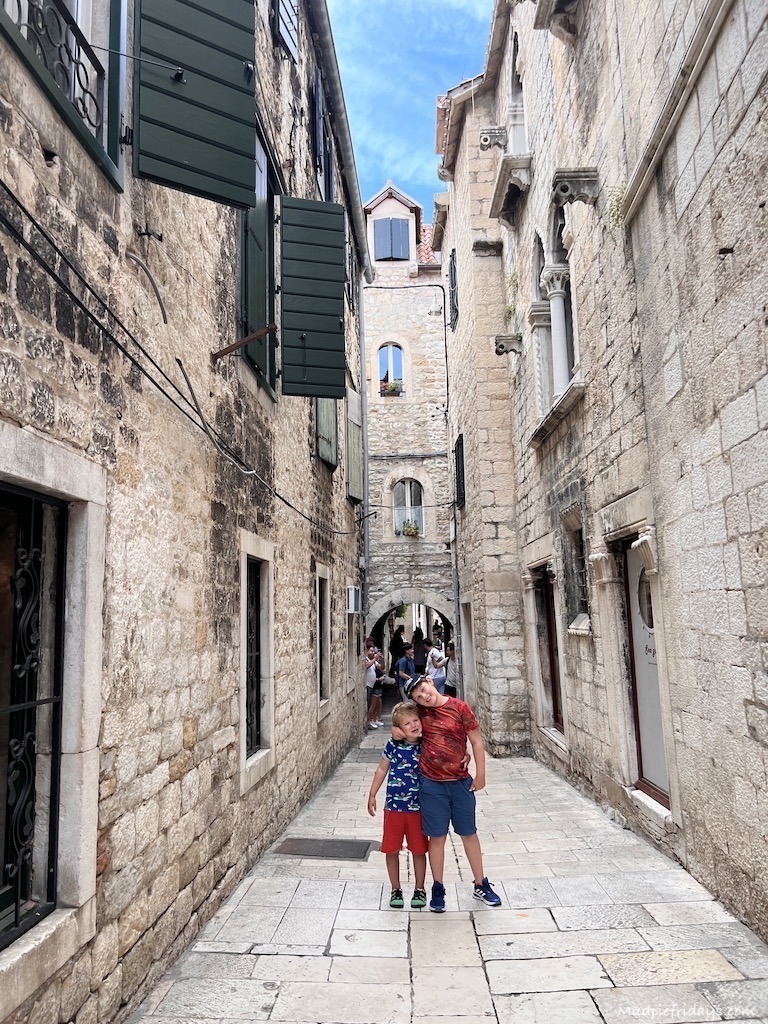
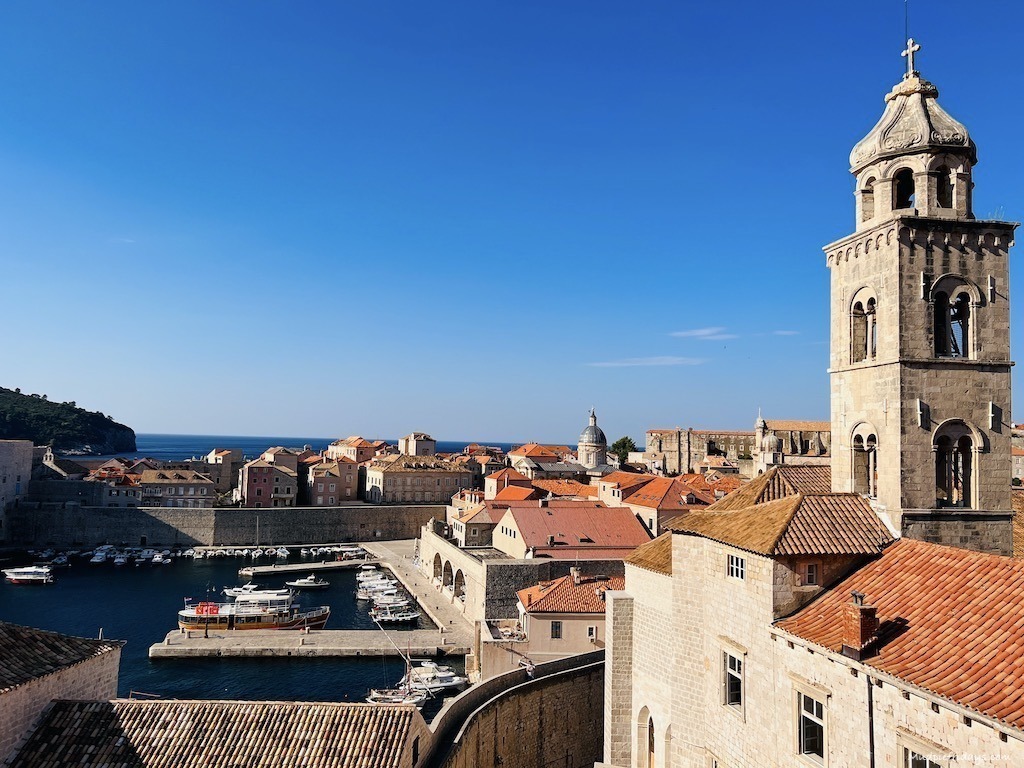
We visited Croatia at the end of July and the beginning of August and unsurprisingly it was very hot. With the two weeks having temperatures being between 38 and 33 degrees. The boys did extremely well but hats are a must, especially in the cities. Although you would imagine that there should be lots of shade in medieval streets that was not always the case. And there is very little airflow due to the height of the buildings. We would freeze small bottles of water which really helps keep the kids cool when out and about.
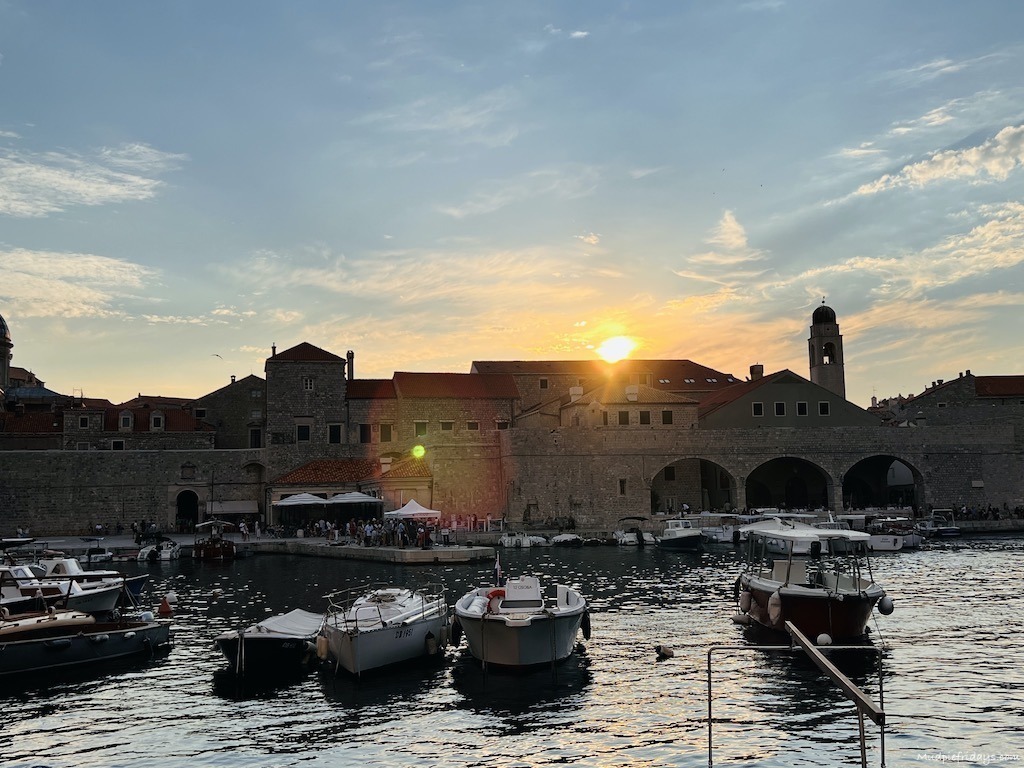
We did pack as much into our two-week Croatia itinerary as we would normally do. Ensuring we left plenty of downtime. Especially in Dubrovnik where we would rise early and then nap in the afternoon during the hottest part of the day. Before going out and exploring in the later afternoon and evening.
Languages
Croatia seems very popular with other Europan countries including the Scandinavians and Germans. We saw a lot of European plates on our road trip. Many of th menus are in Croatian, English and German. And almost everyone w came across spoke English. Making it an incredibly easy destination for a holiday. Although we did not see many English-speaking tourists. Apart from when a United States cruise ship that arrived while we were in Dubrovnik.
Hiring a car and driving
We picked up a hire car from Split airport. There were lots of different companies although I would recommend booking in advance. As they were turning people away while we were there. The other thing I would do is ensure you book a hire car that is cancellable. As we found a big disparity between the price we initially booked our hire car for and what we eventually paid. This Croatia travel tip will save you a lot of money. It saved us over £500. Being able to check car rental a few weeks before we travelled meant that we halved the original price. By cancelling our initial booking and then making a new one.
We found driving around Split and into Sibenik easy and straightforward. Some of their motorways are toll roads. Which can be paid by both card and cash. However, we chose to stay off the motorways. The quality of the Croatian roads was very good, better than we had seen in some parts of Italy and Spain. Which meant we got to pass various little medieval towns with the locals selling their wares on the side of the road. These included garlic, olive oil, Croatian wine and tomatoes. Driving allowed us to see more of the beautiful country. Road signs are easy to navigate and read, the speed limit easy to identify and we found other drivers to be considerate.
Parking
Parking can be a bit hit-and-miss. Especially in the major cities where it is limited. Although there is on-the-road parking in most places. The car parks can get full quickly so my advice would be to arrive early. Many have parking meters, which normally had instructions in English. Although it took us a few attempts to realise that they do not take UK bank cards in the parking meters. Leading us to beg to change some notes as they didn’t give change either. Later in the day at some of the touristy locations, there are parking attendants to help. They are hard to miss since they normally have a t-shirt with parking written on the back.
Public transportation
As we were on the Dalmatian coast and found public transport by boat easy to navigate. Using it to reach Hvar from Split and also to travel from Split to Dubrovnik. Many of the ferries can be booked on the day or in advance online we found this the best way to travel. The ferries are a popular way to travel to the various Croatian Islands around the Dalmatian coast.
Rail travel feels limited compared to other European countries, but they do have an established bus service. Taxis were also readily available. In the more tourist areas, the taxi ranks will show you on a sign what the price should be to various destinations. The taxi drivers should also tell you how much the fare will be in advance.
Related Blog Posts – Tips for Croatia
If you have enjoyed this post about Croatia travel tips and are thinking of visiting Croatia. Then you may be interested in some of the other blog posts I have written. Depending on where you are considering visiting
Dubrovnik
- Dubrovnik is an amazing city and if you only do one thing during your visit then make sure it is its magnificent city walls.
- If you also brought a city pass then you will get free entrance to many of Dubrovnik’s museums.
- You will also be able to get a discount on a trip to Lokrum Island which is also on the UNESCO world heritage site. If you would prefer a beach close to the old town then Banj Beach Dubrovnik is the closest.
- Staying for a little longer then you will be able to take some fantastic day trips from Dubrovnik. Many of these are on our list for when we return.
- Travelling with kids as we did in the Summer months can be a challenge – Dubrovnik with kids.
- Don’t want to pay for a guided tour? It is possible to do your own walking tour within Dubrovnik’s city walls for free! – Free walking tour of Dubrovnik.
- Curious about the Dubrovnik cable car? We went to watch the sunset over the pearl of the Adriatic – A trip on the Cable Car in Dubrovnik & dinner at the Panorama Restuarant
Split
- Croatia travel tips we found travelling into the city from the airport via public transport particularly easy – How to get from Spit airport into the city.
- There is so much to do in Split we really enjoyed our visit to the city. Including the UNESCO site of the Diocletian Palace and The Green Market.
- We also visited Dubrovnik during our 2 weeks Croatia Holiday. Trying to decide which city to visit, this may help – Split or Dubrovnik.
- While staying in Split you may want to consider a day trip to Hvar or a visit to national parks such as Krka National Park
- or Kornati National Park, plus other day trips from Split. Hopefully, we will return and visit the Plitvice Lakes National Park in the future.
Sibenik
- We also spent a week in Sibenik prior to visiting Split. It was a great location for the boys to enjoy and has some wonderful beaches.
We really enjoyed our trip to Croatia, it is s such a great place and definitely worth visiting. On our next visit, we hope to go off the beaten path where there are fewer crowds. I would also recommend visiting during the shoulder season. At this time of the year, it should be less hot but you should still get sunny days. Have you visited Croatia? I would love to hear about your experiences in the comments below.
I hope you have found this post on Croatia travel tips useful. if you are visiting Croatia I hope you have a wonderful time.

If you’ve liked this post please follow me on my social media channels:
Mudpie Fridays: Twitter | Instagram | Facebook | Pinterest | LinkedIn
PIN for later – Tips for Visiting Croatia