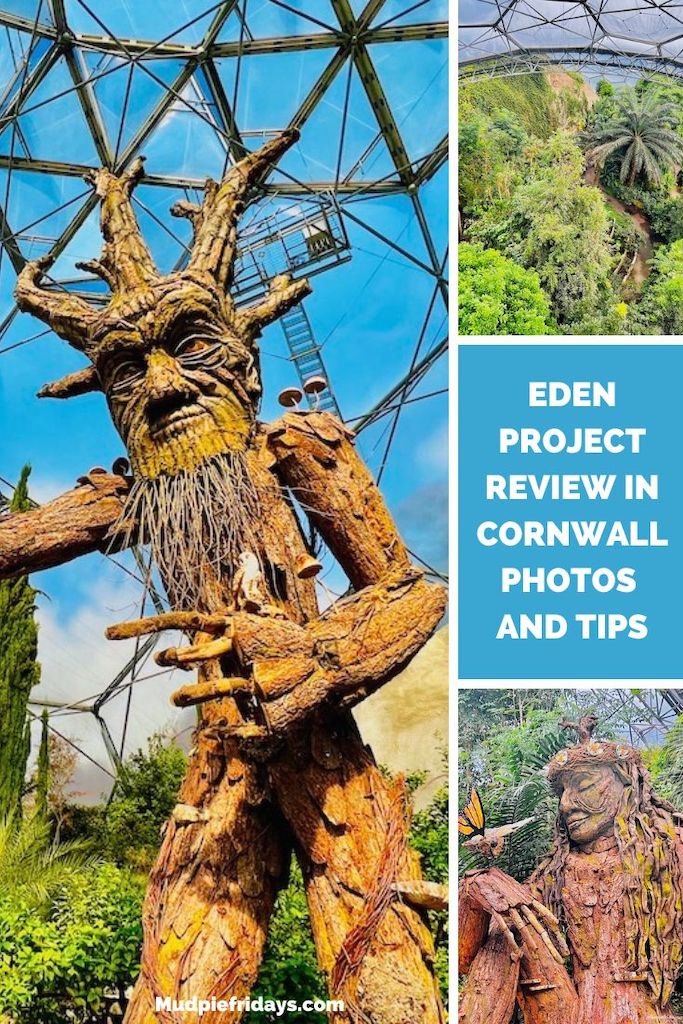
While we were staying in Cornwall at Glynn Barton Cottages we visited the Eden Project Cornwall which is only a short drive away. Having been lucky to visit Eden Project several times before the boys were super excited to visit over Halloween week in Cornwall. As usual, Eden Project had a special event running throughout half-term week which meant we visited the towering tree giants. Find out all about our visit in our Eden Project Review.
AD – We were given tickets in return for this blog post – Eden Project Review
If you have not been to the Eden Project before then it is so much more than a tourist attraction in Cornwall. It is an innovative project that combines education, science, and entertainment to promote sustainability and environmental awareness. It is also a registered charity that is dedicated to promoting sustainability and environmental education. The educational charity was established in 1995 to create a space where people could learn about the natural world and the importance of protecting it. Today, the Eden Project charity works on a range of projects both in the UK and around the world, from sustainable agriculture to renewable energy. As you walk around the visitor attraction you can see how this runs through all the information that is provided and the activities which both children and adults can enjoy.


The Eden Project Review
Before we get into all the amazing things that you can do at the Eden Project Cornwall here are some answers to the more frequent questions we have been asked:
Is the Eden Project worth it
In my mind yes, the Eden Project is totally worth it. It is a full day out. Especially when visiting with children since there is a lot to explore and plenty to do. Fun and informative with something for all ages. I do not think we have been anywhere else which is even similar. Predominately based inside it is also a great rainy day activity.
How long does it take to go around the Eden Project?
We always spend a whole day visiting the Eden Project arriving when it opens at 9.30 am and leaving around 5 pm. Of course, you could probably walk around the attraction quicker. The website says you can do it all in four to five hours. But there is so much to see that I think it is worth taking your time so that you do not miss anything. Plus there are a lot of interactive displays and if you rush you will miss it all.
What is the best time to visit the Eden Project Cornwall?
We have visited in the Spring, Summer and now Autumn. Each season brings something different. I think visiting in the Autumn is the best time to visit the Eden Project. It is not as busy as it is in the height of Summer, even during the half-term holidays. Plus when you go into the biomes it is not too hot, but mildly pleasant. Feeling the warm air after being outside in the cold always makes me smile. If you go reasonably early into the Autumn then you will also still see the last of the Summer flowers with a pop of colour and you can still explore the outside gardens.
How to get to the Eden Project Cornwall
With the focus on sustainability, you will not be surprised to hear that there are good transport links to the Eden Project. Because of where we were staying we drove, there is ample free parking in the large car park. The attraction is easily accessible and well-signposted from the A30. It is best to follow the brown signs as this way you avoid going through the small local villages which can get very busy in the Summer months.
The nearest train station is in St Austell which is around 10 miles away. From here you can get a taxi or a bus. Transport for Cornwall’s number 28 and 31 services travel directly to the Eden Project, with connecting routes across Cornwall. You can use the GO Bus Cornwall website to plan your route.
Eden Project also have a green travel incentive which means that if you arrive by bike or foot then you can receive a free guidebook worth £6 per group. The Eden Project was built in an old clay pit, starting life as a huge crater. One route to arrive by bike is to explore Cornwall’s mining heritage along the off-road Clay Trails which lead to the reclaimed China clay pit. To plan your route you can visit the Clay Trails website.





How much does it cost to go to the Eden Project?
The entrance fee is seasonal so prices vary depending on the date you visit. For an adult ticket prices online range from £33 to £38, and children £11 to £12. You get a discount by pre-booking rather than purchasing tickets at the visitor centre. You can convert your tickets to annual passes by treating your ticket purchase as a donation.
Unlike other attractions, you can not buy a family ticket for general admission. Although you can buy a family membership from £93. This has other benefits and represents great value when you compare it to a general admission ticket.
If you are looking to save money on your Eden Project admission then if you have a Blue Peter badge entrance is free. You can purchase your tickets from the Eden Project website.
Eden Project things to do on your visit – our review
There are lots of things to see and do on a day trip when visiting the Eden Project it can feel a little overwhelming, especially on a first visit. We tend to focus on the main attractions in the couple of times we have visited.
Mediterranean Biome
This is my personal favourite. As you walk through the doors you can help but feel like you have walked into a little Greek village. With white-washed walls, olive trees and giant pink Bougainvillea draping across the entrance way it is so reminiscent of being on holiday. The smells are an assault on the scenes, if you close your eyes you could be abroad. There are over 1000 incredible plants in the gardens. Which covers the Mediterranean, California, South Africa and Western Australia.
The boys were particularly taken by the large aloe vera plants and the citrus grove. As well as the gardens and plant species there are several sculptures. The largest is Tim Shaw’s The Rites of Dionysus sculpture which is unmissable since it is the centre of the biome. It depicts the myth of Dionysus, the Greek god of wine and merriment, and his followers, the Maenads, who dance and writhe through the grape vines.
When we visited we also found one of the tree giants. At set times throughout the day, stories were being told. At other times children can listen to the Wise Woodland tell stories by pressing a button. Allow at least an hour.


Rainforest Biome
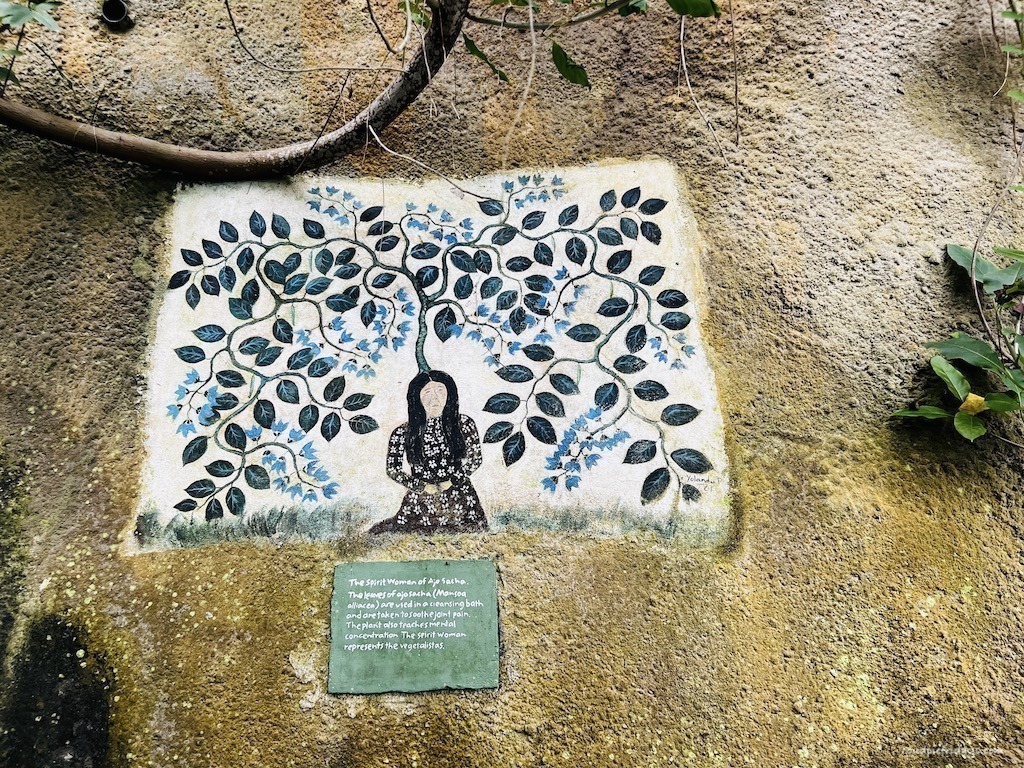
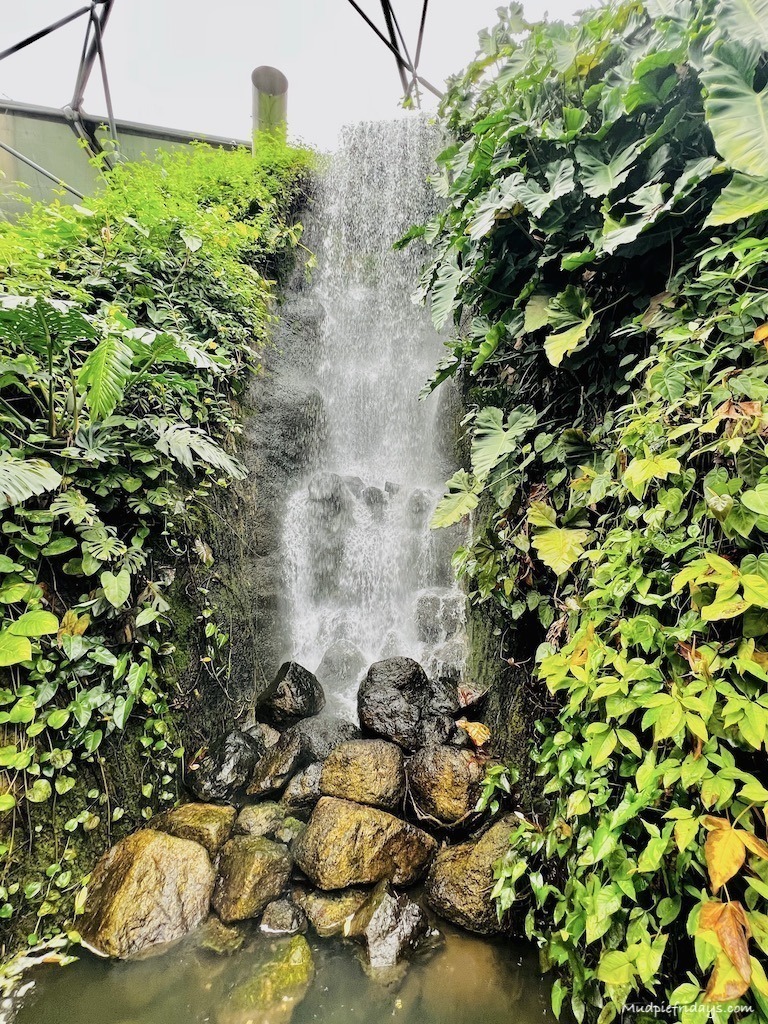
As you leave the Mediterranean Biome you cross the main entrance into the indoor largest rainforest in the world. This was our next stop. There is a noticeable difference in temperature as you walk into the humid tropics biome. This tropical biome is larger than its neighbour. So much so that it has an inside waterfall. With plant life that covers the world’s rainforest environments including West Africa, Southeast Asia and tropical South America. The boys got the chance to see many cooking ingredients we use at home such as ginger, sugar, bananas, coffee and chocolate.
It really is like walking into a different world. With lots of exhibits that consider the impact of climate change. The main routes around the biome will educate everyone on the importance of the rainforest, its devastation and how we can help to build a better future.
The boy’s favourite part was the rope bridge that takes you along to the canopy walk. Here we only needed to wait for a short time before we could climb to the top of the biome and look out across the tree tops and different plants. The temperature is a lot hotter the higher you go. This means that only small groups of people are allowed up at a time. Which works really well rather than having lots of people on the viewing platform. Allow an hour and a half.




The Core
An inside area where there are several different exhibitions to look at. The state-of-the-art education centre aims to inspire visitors to make positive changes in their lives and communities to promote sustainability and environmental conservation.
The building itself has been equipped with the latest sustainable technologies, including solar panels, rainwater harvesting systems, and a biomass boiler, which all help to reduce energy consumption and carbon emissions. Inside there is the Invisible Worlds Exhibition. This reveals the world beyond our senses: too big, too small, too fast, too slow, too far away in space and time. The exhibition explores how life is shaped by, and shapes, invisible systems.
Our favourite exhibit is Blue, which is a large ceramic immersive art installation that releases smoke rings. I could sit and watch this all day. The boys love waiting to catch the rings. There is plenty of space around the tower for children to run around and play.


Nature’s Playground
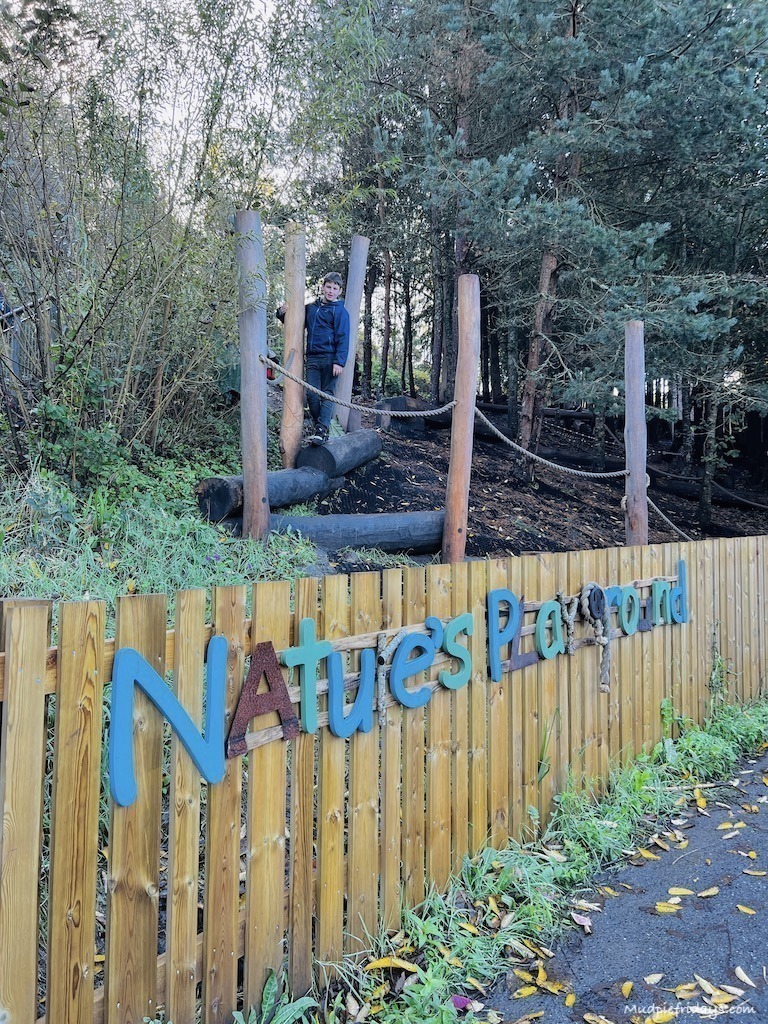
The Nature’s Playground at Eden Project is a relatively new addition to the attraction. It is one of the largest play areas in the South West spreading over 500 square metres. You do not need to book the play area in advance and it is included in the price of your entrance ticket. Giving you unlimited access. One of the things I really liked about the area is that there is something for both young children and older children. Bot the boys enjoyed exploring the area.
With several different water play areas, it is worth bringing a change of clothes for the summer months. Or waterproofs in the colder months. The playground spreads down the footpaths that lead to The Core with plenty of climbing activities. As you would expect the whole play area is made out of natural materials from sustainable sources.


Outdoor Gardens
Although the massive biomes take over the landscape there are a lot of different outside areas to explore. With 20 different plant-based exhibits, colourful seasonal borders and art installations. As we grow our own vegetables at home the boys were particularly interested in the vegetables. In total, there are over 3000 plants spread across twenty acres. You should allow around two hours to see it all.
Eden Project Review Ice Skating Rink
This is a new addition since our last visit. You do need to book the ice rink which can be done on the day of your visit at the ice rink itself. Running from October half term and into December you can also book online. Prices start at £11 for an adult and £9 for a child. You can also book a penguin for £5 per child. Each session lasts for 40 minutes with a new session starting on the hour. There is also somewhere to sit and purchase hot drinks.
Zip Wire & Adventure Activities
This is not part of the Eden Project but is operated by Hangloose which is a separate company. You do not need to have a ticket for entrance to the Eden Project to take part in the activities. Prices start at £15. Fly on England’s fastest zip wire, tackle an aerial assault course and plummet in a giant swing. More information can be found on the Hangloose website.



Top tips for visiting the Eden Project Review
If you are planning a visit to the Eden Project then here are some top tips for your visit:
- It is a good idea to take water into the indoor biomes due to the temperature changes. There is the ability to fill up water bottles in the canteen area below.
- If you are visiting on sunny days then it is worth taking sun cream for the biomes as there is no UV protection. It is possible to hang your coats up next to the information point for free. Plus you can also buy ice cream in the little shop or the ice cream parlour between the two biomes.
- For kiddies, it is worth wearing layers so you can take them off as you go around as the heat intensifies.
- If you are visiting in the hotter Summer months then I would head to the rainforest biome first as it will get hotter as the day goes on. If you want to go up to the rainforest lookout platform as we did it is also a good idea to do this early. Since it may close if the temperatures rise too high.
And more…
- The exit is through the gift shop. There are plenty of things to tempt, although I was impressed with the range of pocket money gifts they had.
- There are several picnic areas around the attraction which is an easy option to save money.
- If you want to plan your visit in advance then maps are available online.
- Check their website before visiting as they run all year-round family events. Some of these may require booking in advance. Such as the wand workshop. These tend to be popular and sell out.
- Try to arrive at the opening as the car parks are a reasonable walk away. The later you arrive the further the walk and it’s uphill all the way back. There is a land train although it was not running on our visit.
Food options at the Eden Project Review
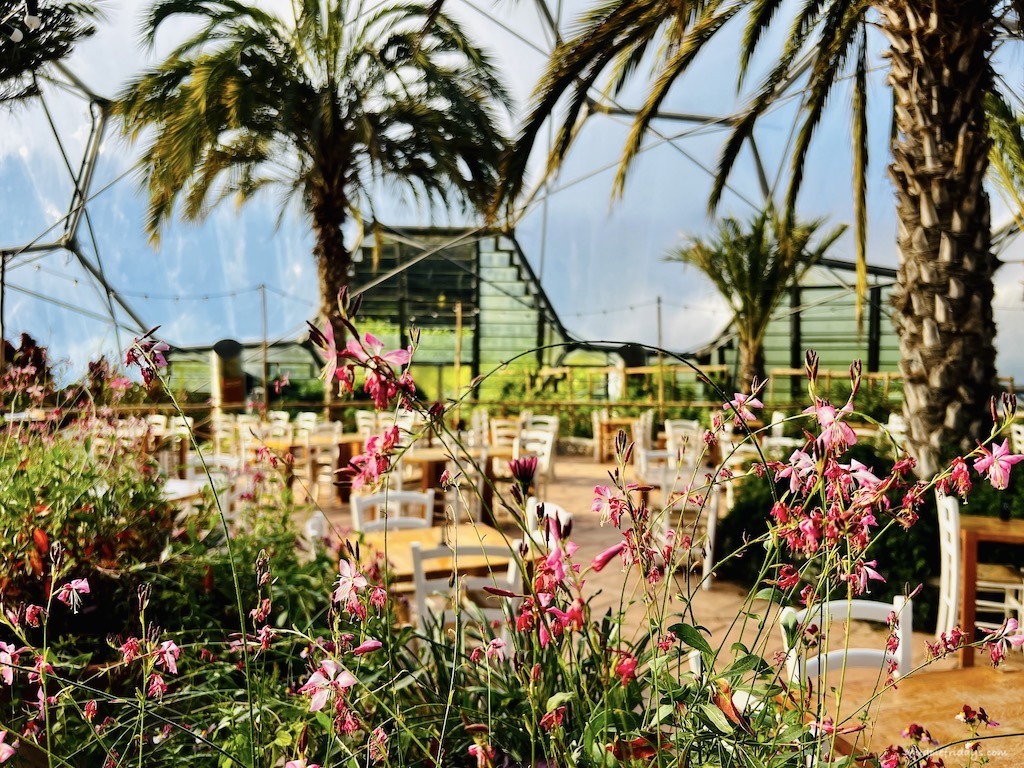
There are several different places to eat. We have wanted to eat in the Med Terrace which is in the Mediterranean Biome. If you are thinking of doing the same then my advice would be to get there when it opens at 11.30 am as it fills up really quickly. Selling a selection of pizzas and some rather delicious paella. I was surprised by how well-priced the food was considering the location and the captive audience. Two pizzas, paella, and garlic bread plus drinks came to around £45.
There are also several other places such as the Biome Kitchen which is the largest restaurant. Selling a selection of salads, hot dogs, curry, soup and pies. Expect to pay around £11-£12 for a main and a drink. A children’s menu is also available. There is also the opportunity to pick up a Cornish pasty from the Bakehouse or a sandwich from the Sandwich Shack. There are also other numerous venues to pick up coffee and cake or ice cream. And also plenty of outdoor areas where you can sit for a picnic.


Where to stay when visiting the Eden Project Cornwall
If you are planning on visiting the Eden Project and looking for somewhere to stay which is close by then Glynn Barton Cottages where we stayed is a twenty-minute drive away.
We had a great family day out with so much to do and see. Have you visited this amazing place? Please let me know about your experiences in the comments below.

If you’ve liked this post please follow me on my social media channels:
Mudpie Fridays: Twitter | Instagram | Facebook | Pinterest |LinkedIn
PIN for later – Eden Project Review